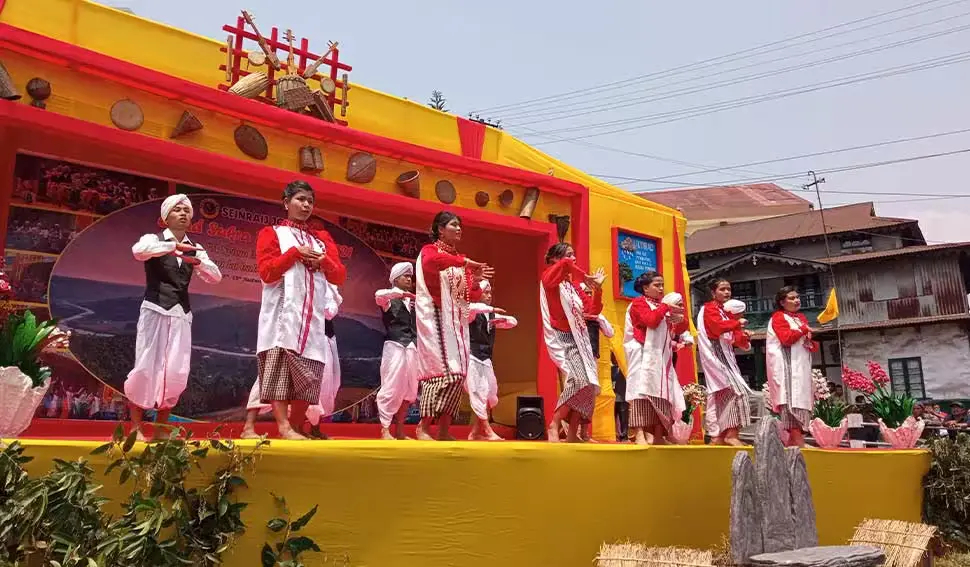
Traditional Dance
Living Traditions
Dances remain a living tradition at the heart of major festivals like Nongkrem, Shad Suk Mynsiem, Behdienkhlam, and Wangala — embodying gratitude, harvest celebrations, and spiritual devotion. Performed in vibrant traditional attire with symbolic rhythms and movements, these dynamic expressions of heritage continue to evolve while offering visitors an immersive window into the enduring cultural identity of Meghalaya’s tribes.

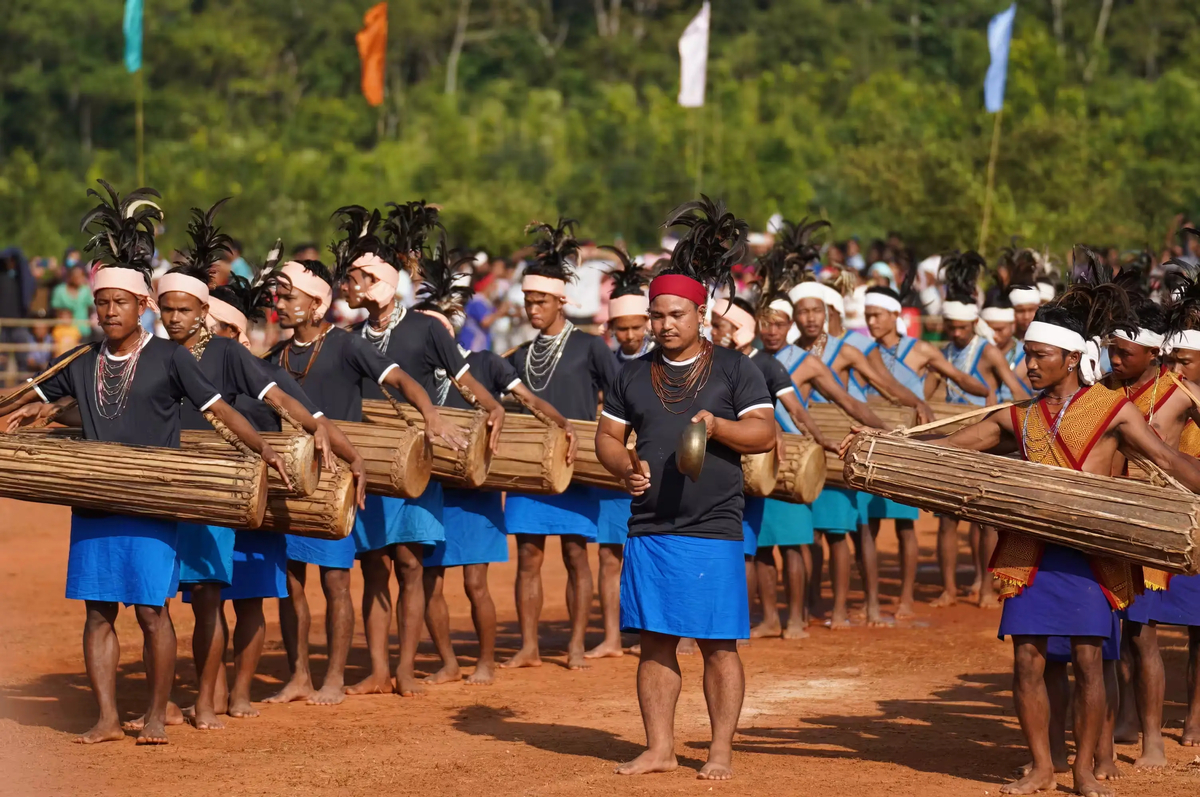
Wangala Dance
A festival of 'The Hundred Drums', the Wangala dance is a vibrant, rhythmic group dance by the Garo people. Dancers move in lines or semi-circles. The movements are grounded, rhythmic, and powerful, responding closely to the percussive drumming.
Shad Suk Mynsiem
Shad Suk Mynsiem or 'Dance of the Peaceful Hearts' is a traditional ritualistic dance of the Khasi. Men and women, adorned in silk garments and gold ornaments, move in graceful, rhythmic, and dignified style, symbolizing harmony with nature and divine forces. Men perform more energetic steps with defensive postures, while women maintain poised and gentle motions. The dance is accompanied by traditional instruments like drums (ka nakra), cymbals (ka ksing), and pipes (tangmuri), which guide the pace and sequence of the dance.

Shad Nongkrem
The Shad Nongkrem festival in Khasi tradition involves elaborate rituals performed by the royal clan and features ceremonial dances by young men and virgin women adorned in traditional attire. Women are the central figures of the dance, symbolizing purity and prosperity. Men perform as protectors, moving in defensive, circular patterns around the women. Positioned in the outer circle, men carry swords and spears, wearing regal attire with plumed headgear and vibrant robes. Their movements are energetic and defensive, circling and shielding the women, representing the role of men as protectors of tradition, clan, and the land. The dance is coordinated with the rhythms of traditional musical instruments like ka bom (drum), ka ksing (cymbals), and tangmuri (reed pipe).

Shad Mastieh
Ka Shad Mastieh is an ancient warrior dance of the Khasi community, performed by male dancers to honour their forefathers who defended the land and protected the dignity of Khasi women. Set to the powerful beats of the Ksing drum, the dance reflects the community’s deep connection to rhythm and heritage. Dancers move in coordinated steps similar to the Ka Nohkjat style, striking the ground before breaking into brisk motion. The performance builds up to a dramatic mock combat, where pairs of men clash swords in symbolic battle. Shad Suk Mynsiem, featuring female dancers, marks the opening, followed by a collective bend in prayer to thank God at the end.
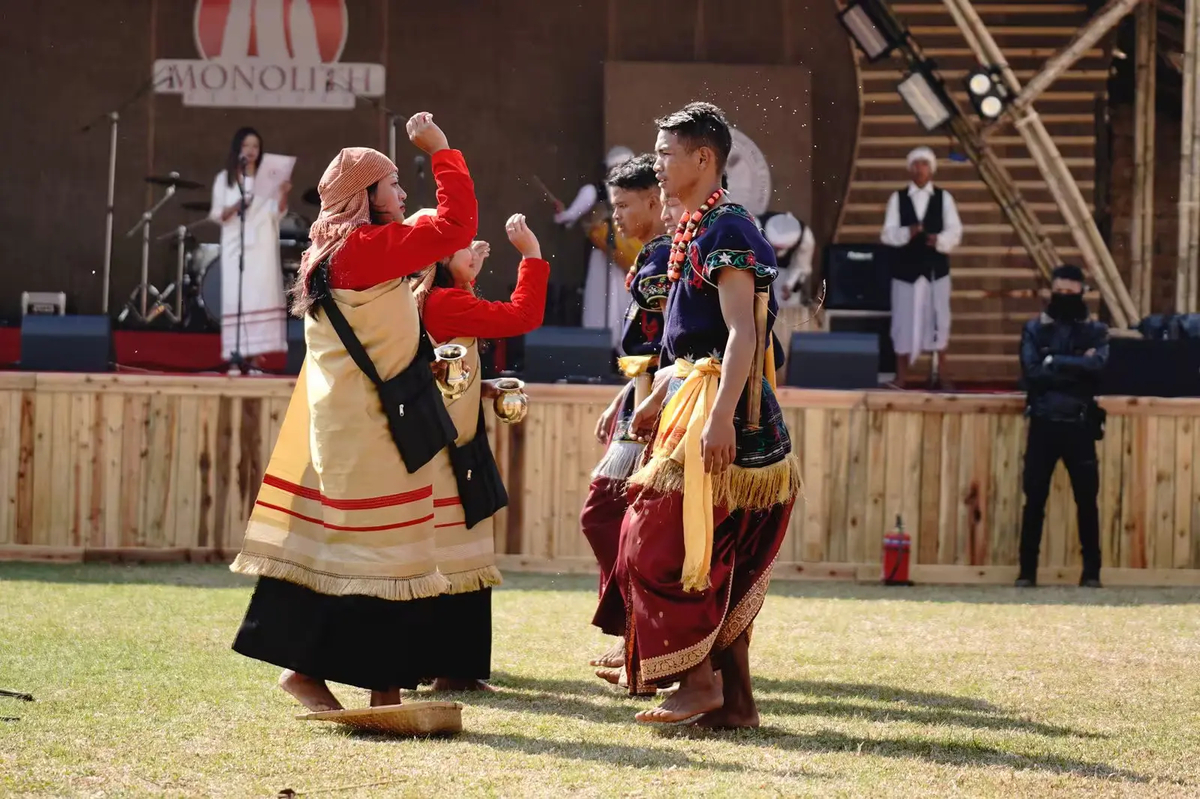
Lahoo Dance
The Laho Dance, also known as the Chipiah Dance, is a lively folk dance of the Pnar (Jaintia) community in Meghalaya, traditionally performed during the Behdienkhlam festival. This dance exemplifies communal joy, unity, and playful celebration. Men and women dance together in a typical formation involving a woman dancing arm-in-arm with two men, swaying rhythmically. Uniquely, the dance is not accompanied by instruments. A lead male dancer, often called a ‘cheerleader’, recites lively, ribald couplets to maintain rhythm and uplift spirit.
Chad Sukra
Ka Chad Sukra or 'dance of the joyful heart' is a pre-sowing spring festival of the Pnar (Jaintia) community. Organized by local community groups like Sein Raij, it combine communal rituals, drama, music, and dance to honour Mother Nature (Ka Bei Rymaw). This agrarian festival precedes agricultural activities and no fields are ploughed before the festival is completed. Participants of all ages join in the traditional dance of Lahoo. From children to elders, every dancer moves together to symbolically signal the start of planting. Dancers perform to traditional beats and songs, often with no instruments except for the chants and verses recited by the community members.